





Christmasberry (Lycium carolinianum)
Regular price $19.95Hardy Native Shrub with Winter Berries
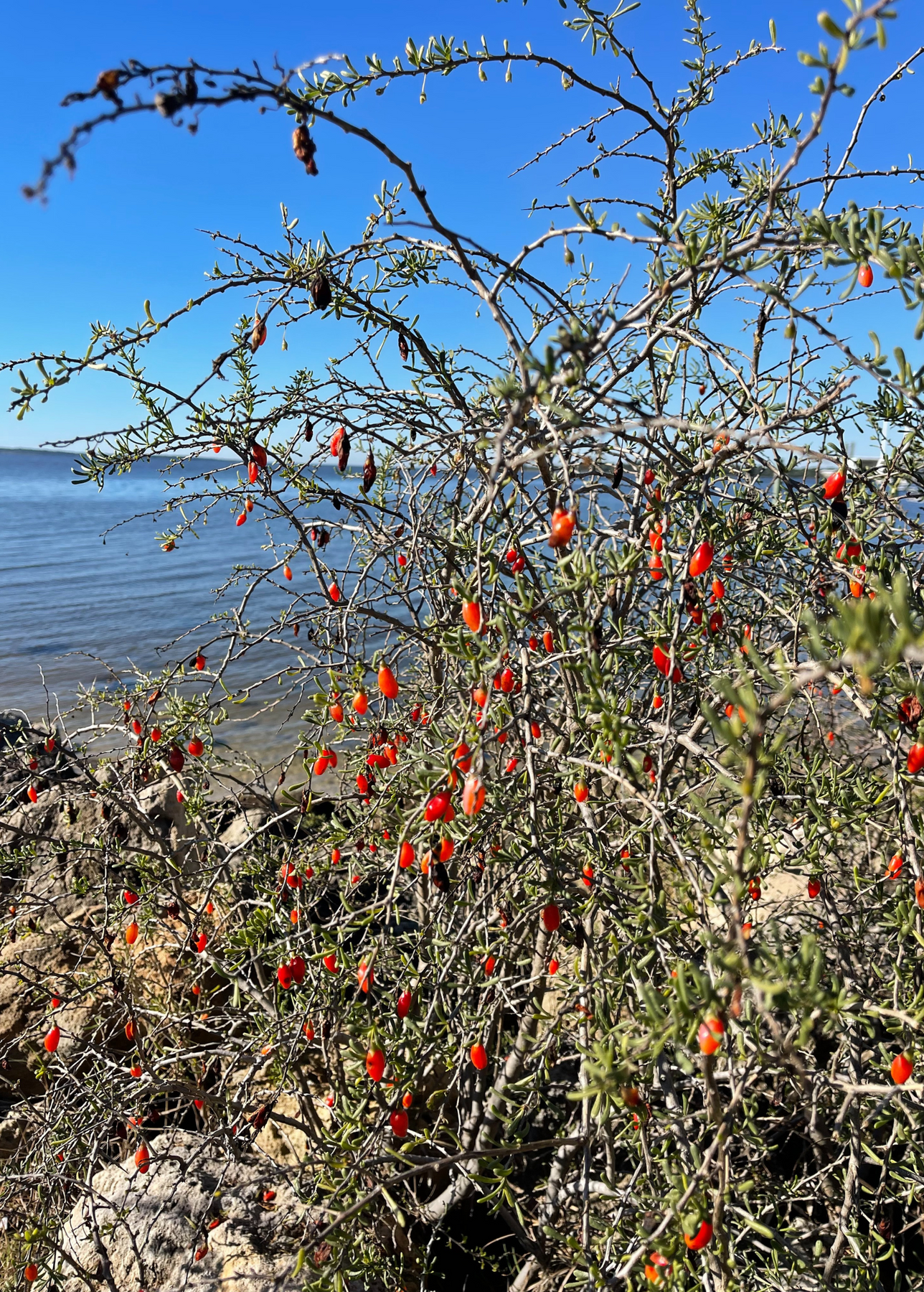
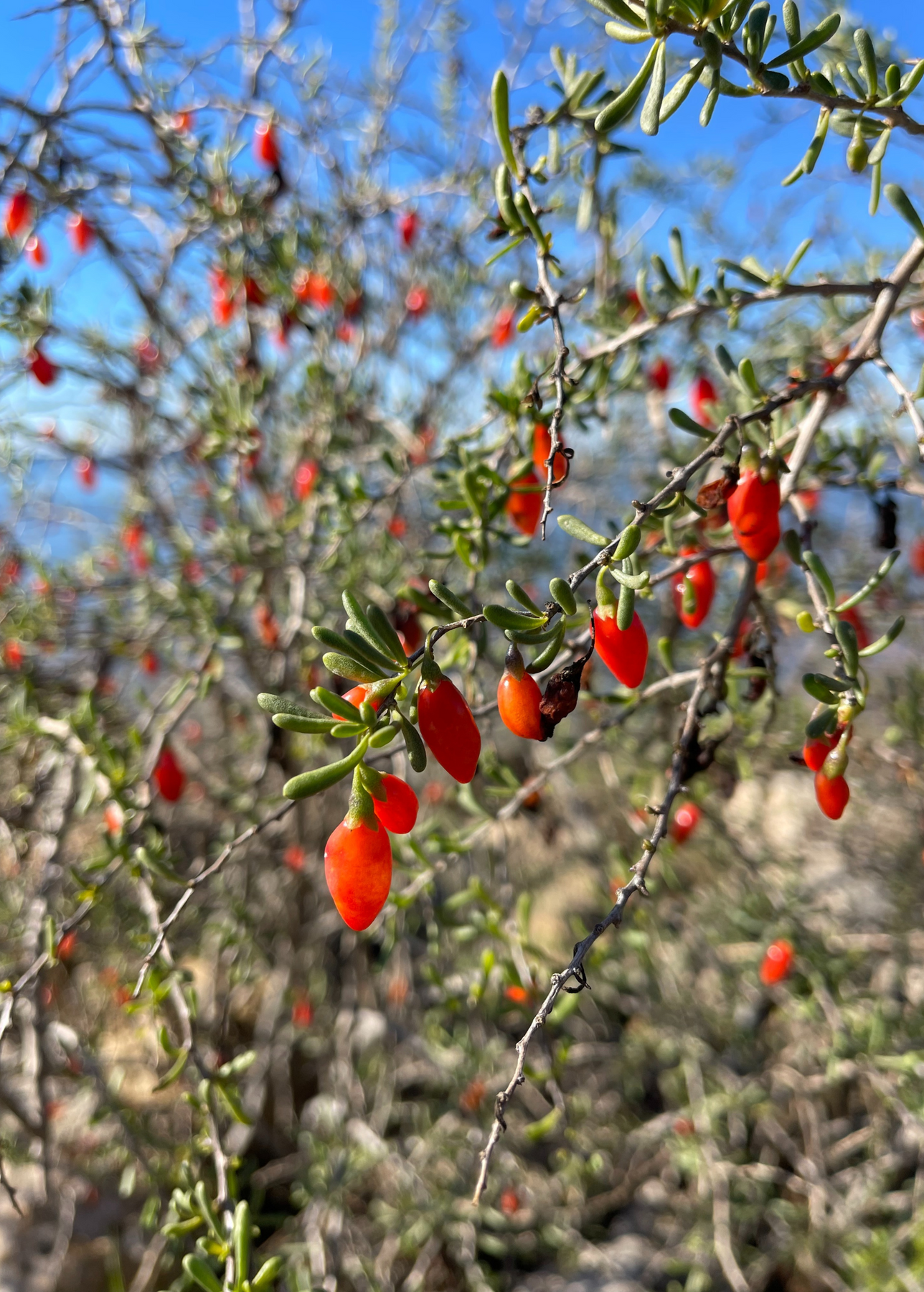
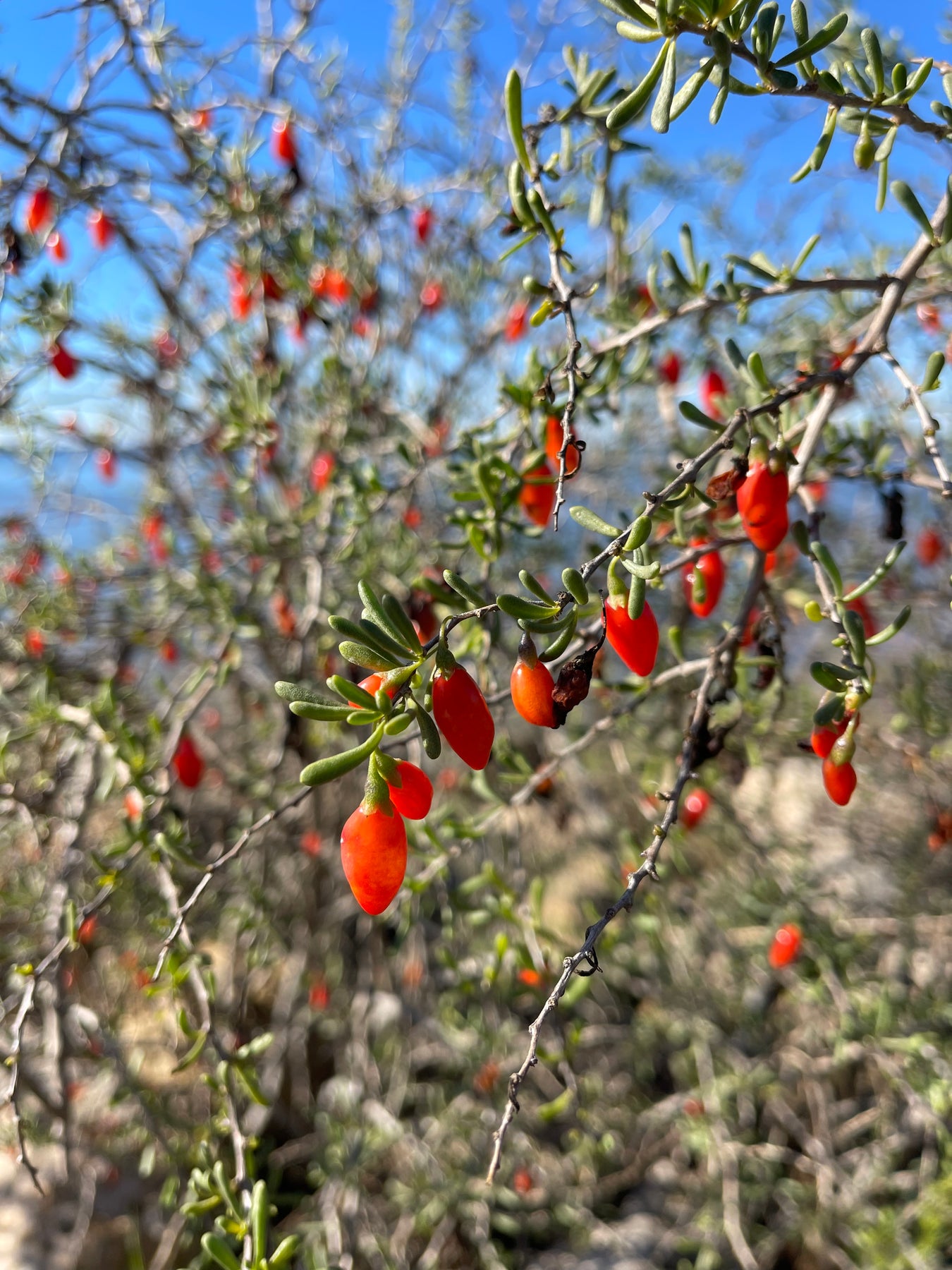
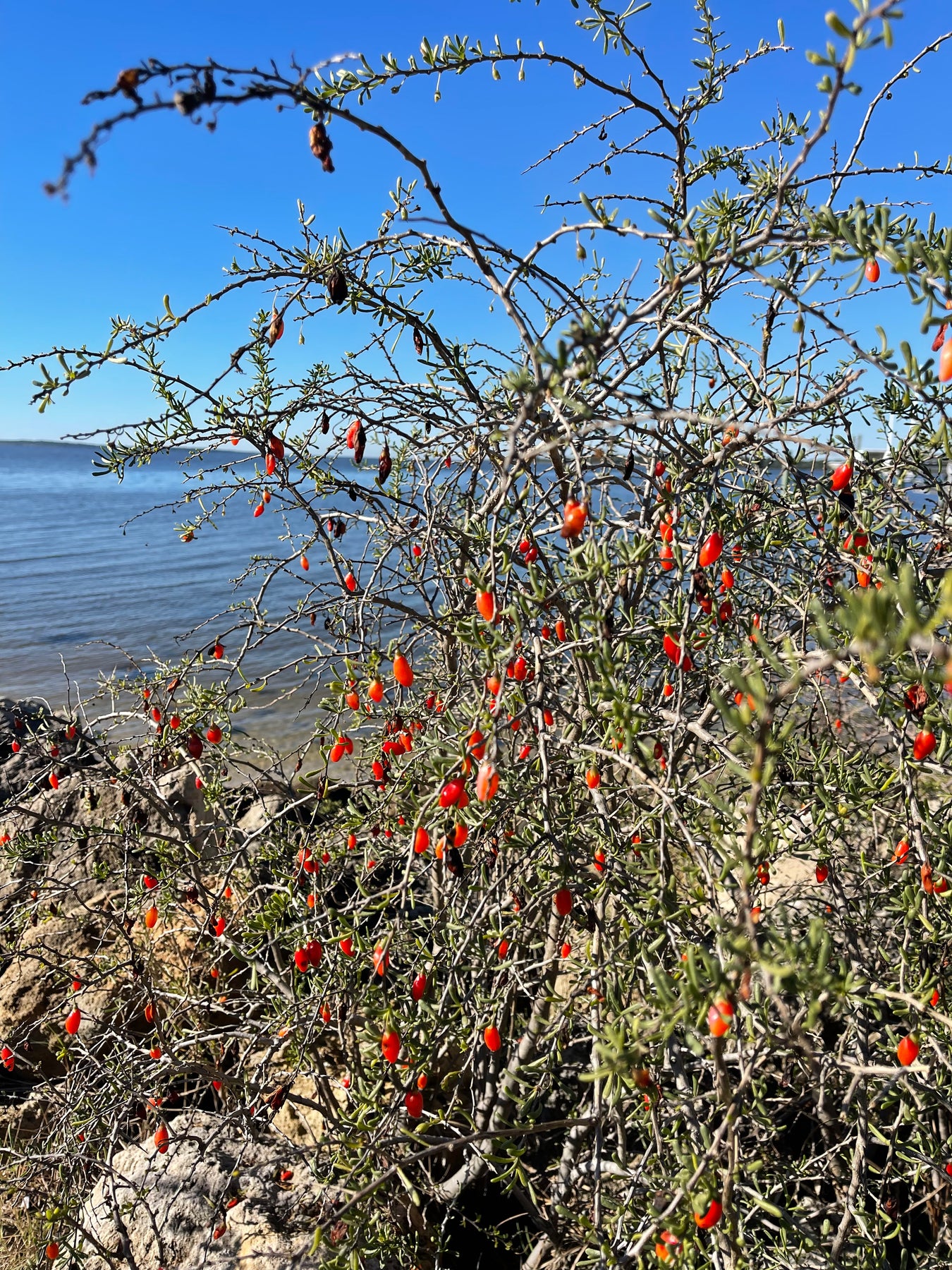
Christmasberry (Lycium carolinianum) is a tough, adaptable shrub native to the southeastern United States and Caribbean, including Florida. This compact, thorny plant produces small, succulent gray-green leaves along sprawling, somewhat leggy branches. In fall and winter, clusters of bright red to orange berries appear, creating a striking contrast against the muted foliage and giving the plant its festive common name.
We’ve found Christmasberry growing wild along the rocky, sandy coasts of western Florida, where its natural tolerance for salt spray, drought, and poor soils allows it to thrive. While compact in stature, typically reaching 3–6 feet tall and wide, this resilient native has plenty of landscape value as a wildlife plant, coastal shrub, ground cover, or naturalized planting.
Cultural & Culinary Significance
Christmasberry has a long connection to the coastal landscapes of the southeastern United States and Caribbean, where it grows naturally in sandy and rocky habitats. Although its bright berries are technically edible, they are more commonly enjoyed by birds and other wildlife than people. Its greatest cultural and ecological value comes from its role as a native plant that supports wildlife while adding winter color to coastal landscapes. The festive clusters of berries have also made it a popular ornamental choice for gardens where winter interest is desired.
Why Grow Christmasberry?
- Winter Berries: Bright red to orange berries add a splash of color during fall and winter.
- Wildlife Favorite: Provides valuable food for birds and other small animals.
- Coastal Tough: Naturally tolerant of salt spray, sandy soils, and drought.
- Florida Native: Grow a resilient native species with strong connections to Florida’s coastal ecosystems.
- Low-Maintenance Landscape Plant: Its adaptability makes it useful for naturalized gardens, erosion control, and coastal plantings.
Growing Tips
(Also known as: Christmasberry, Carolina Wolfberry, Carolina Desert-Thorn, Lycium carolinianum*)*
Christmasberry grows best in full sun to part shade and well-draining soil. It adapts especially well to sandy, rocky, and poor soils and tolerates both drought and salt spray once established. Water regularly while young, then reduce watering as the plant becomes established. Prune as needed to maintain a compact shape or encourage denser growth, taking care around its thorny branches. It can be grown in coastal landscapes, wildlife gardens, containers, or in-ground and is hardy in USDA Zones 8–11. Expect bright berries primarily in fall and winter.


Wondering about your USDA Growing Zone and what you can grow? 🌎🌿 Learn how to find your Zone and grow tropical plants anywhere—Florida to Alaska! 👉 Read the full blog here!
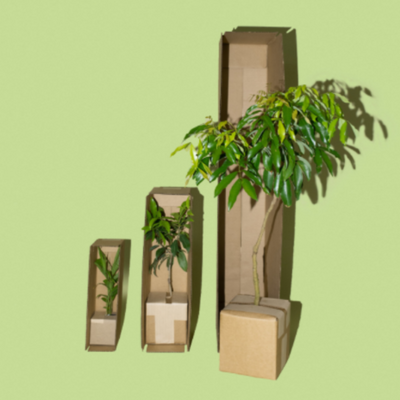
We ship every plant plastic-free and planet-friendly—using compostable packaging, recyclable pots, and carbon-conscious shipping from start to finish. 🌎🌱👉 Our Commitment to Packaging & Shipping Sustainability